The Moment Long-Term Goals Stopped Being Deferred

Recent discussion around AI infrastructure has focused heavily on scale. Power consumption figures, capital expenditure, and data center counts dominate the narrative. These metrics are not incorrect, but they obscure a more consequential shift. The defining feature of large-scale AI workloads is not their magnitude, but their timing.
Systems designed for continuous operation cannot be postponed without consequence. Their demands are not scheduled for future resolution. They must be addressed within the same operational window in which they arise. Once such workloads are introduced, resources that were previously planned on multi-year or staggered timelines are required to be allocated on a shared, immediate horizon.
The change is not primarily about how much is consumed. It is about when allocation decisions must be made.
Power Systems as the First Visible Signal
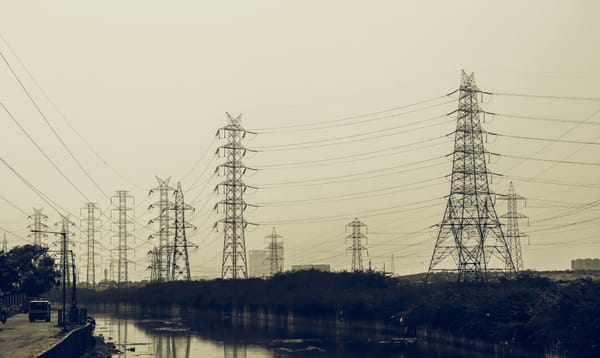
Electric power systems are where this shift becomes visible first, though they are not where it originates. The issue is not absolute scarcity of electricity. It is the classification of certain loads as operationally non-interruptible.
In the United States, the Department of Energy has exercised existing legal authority to delay the retirement of specific power generation units. These decisions have been justified on the basis of grid reliability rather than industrial promotion or policy reversal. Within grid operations and capacity planning, continuous industrial loads are scheduled as non-interruptible. Other uses are shifted later in the planning sequence.
What matters here is not the presence of exceptions, which have historical precedent, but the ordering they reveal. When operational conflicts arise, long-term public objectives do not automatically occupy the highest priority position.
Why the Pressure Is Not Immediately Felt
This reordering is difficult to observe because the pressure does not propagate uniformly. Grid operations absorb it first. Manufacturing schedules adjust next. Long-term contracts then lock in capacity. The effects register within infrastructure systems and financial structures before they appear in consumer pricing or daily experience.
As a result, allocation decisions are completed upstream, inside planning processes and balance sheets, rather than downstream where they would generate immediate political or social response.
Manufacturing Capacity as the Binding Constraint
The most restrictive constraint emerges at the manufacturing layer.
Power generation capacity can be expanded through new projects over multi-year timelines, subject to permitting and capital availability. Manufacturing capacity tied to specific industrial processes operates on a different clock. It depends on specialized equipment, certification regimes, supply chains, and customer alignment. These constraints prevent rapid reallocation within the same timeframe as continuous operational demand.
In recent years, battery manufacturing capacity originally aligned with electric vehicle markets has been redirected toward stationary energy storage systems that support continuous data center operation. This shift involves changes in certification, delivery structure, and customer relationships. Once completed, the same capacity no longer serves multiple systems simultaneously.
Access is reassigned through industrial configuration, not through rhetoric or policy declaration.
Contracts and Capital Lock In the Outcome
Long-term contractual and financial structures then make these allocation decisions durable.
Data center operators frequently secure power through long-term purchase agreements. Utility-scale storage projects are financed on the assumption of stable, continuous load. These arrangements commonly span ten to twenty years and embed current allocation choices into future balance sheets.
Even if efficiency improves or demand patterns change, capacity does not automatically return to a neutral pool. It remains committed through contractual obligation and financial design.
At this stage, allocation ceases to be provisional. It becomes structural.
Conclusion: When Long-Term Goals Enter Operational Comparison
This is not the first instance in which public objectives have yielded priority under resource constraint. History provides many such cases. What distinguishes the present moment is how the ordering occurs.
There has been no explicit political mobilization and no formal declaration that priorities have changed. Instead, long-term public objectives have been drawn into direct operational comparison with systems that require continuous availability.
They have not been abandoned. Their position has been recalibrated. Once long-term goals enter real-time allocation, they are evaluated under the same operational constraints as uninterrupted industrial systems.
That condition now defines the environment in which they must proceed.