AI's Trillion-Dollar Assumption | The Part Elon Musk Leaves Unsaid
Forecasts for AI’s contribution to global GDP cluster between fifteen and twenty trillion dollars by 2030. The number shifts from report to report. The assumption beneath it does not. Each projection treats AI as if it will scale the way software has always scaled.
Elon Musk often talks about physical limits. What materials cost when reduced to elements. What equations allow before ambition enters the picture. What a system consumes before it produces. He applies that lens to energy more than anything else. Solar, batteries, grid storage, Bitcoin mining as a sink for surplus capacity. He calls energy the true currency.
AI runs on energy. It also runs on chips, training data, and a verification layer that has not yet arrived. Musk talks about the first. He does not talk about the others.
ENERGY | Where scale hits its first boundary
Every query activates hardware. Fans, chips, current. One query is invisible. A billion queries reshape demand.
Global AI-related power consumption is projected to reach 945 terawatt-hours by 2030, more than double today’s level. Morgan Stanley forecasts a 45-gigawatt shortfall in the United States by 2028. Seventy-two percent of infrastructure leads cite grid capacity as their primary constraint.
Cooling consumes up to forty percent of that energy. Heat rises in the racks. Pushing it out costs nearly as much as the computation itself. The World Economic Forum estimates that rising temperatures could add 3.3 trillion dollars in cumulative data-center costs by 2055.
New power plants take years to permit and build. Transmission lines take longer. This is the first boundary. Musk talks about it because it sits inside the domain he is already building for.
MATTER | Where production cannot match demand
When power tightens, demand shifts toward chips that deliver more work per watt. Denser designs. Smaller nodes. Higher bandwidth.
A chip is not code. It cannot be copied. It is manufactured layer by layer in facilities that take years to construct and cost tens of billions to operate.
TSMC has said that demand for its most advanced capacity is running roughly three times above supply. High-bandwidth memory has lead times stretching beyond twelve months. Advanced packaging capacity is sold out through 2026. Nvidia’s newest accelerators are backordered before they ship.
TSMC’s first Arizona plant began pilot production in late 2024, with high-volume output expected in 2025. The second plant has been delayed to 2027 or 2028. ASML’s lithography equipment requires years to manufacture. The constraint is not policy or capital. It is fabrication speed.
ENTROPY | Where scaling stops paying off
For a decade, scaling followed a pattern. More compute, more data, better performance. The relationship held long enough to earn a name: scaling laws.
GPT-4 cost an estimated 78 million dollars to train. Gemini Ultra cost more than 190 million dollars. Performance improved, but the gain per dollar fell.
Ilya Sutskever said late last year that the age of scaling is ending.
The internet has been scraped. Books have been digitized. What remains is noisier. Synthetic data helps at the edges. Models trained on their own outputs tend to drift. Training costs rise. Returns diminish.
VERIFIABILITY | Where uncertainty compounds
Every major AI product ships with a version of the same instruction: verify the outputs. The outputs are often useful. They are not reliably correct. When they miss, the confidence does not change.
A large model does not follow rules that can be traced. The relationship between input and output is statistical, shaped by data no one has fully catalogued. No one can explain with precision why a model produces a given answer.
The EU AI Act requires audits for high-risk systems. Forty percent of organizations identify explainability as a primary risk. Fewer than one in five are acting on it. The tools to verify do not exist yet.
THE SEQUENCE | Where one limit amplifies the next
Energy scarcity increases pressure on fabrication. Fabrication limits raise training costs. Rising costs steepen diminishing returns. Diminishing returns increase uncertainty. Uncertainty makes verification harder. Each constraint tightens the next.
THE GAP | Where forecasts stop tracking reality
AI does not scale the way software does. Software copies. AI computes. The infrastructure beneath it moves at the speed of permits, materials, and physics.
Musk talks about energy. He does not mention fabrication ceilings, training-cost curves, or verification gaps. He likely sees them. They lie outside the path he chose to build on.
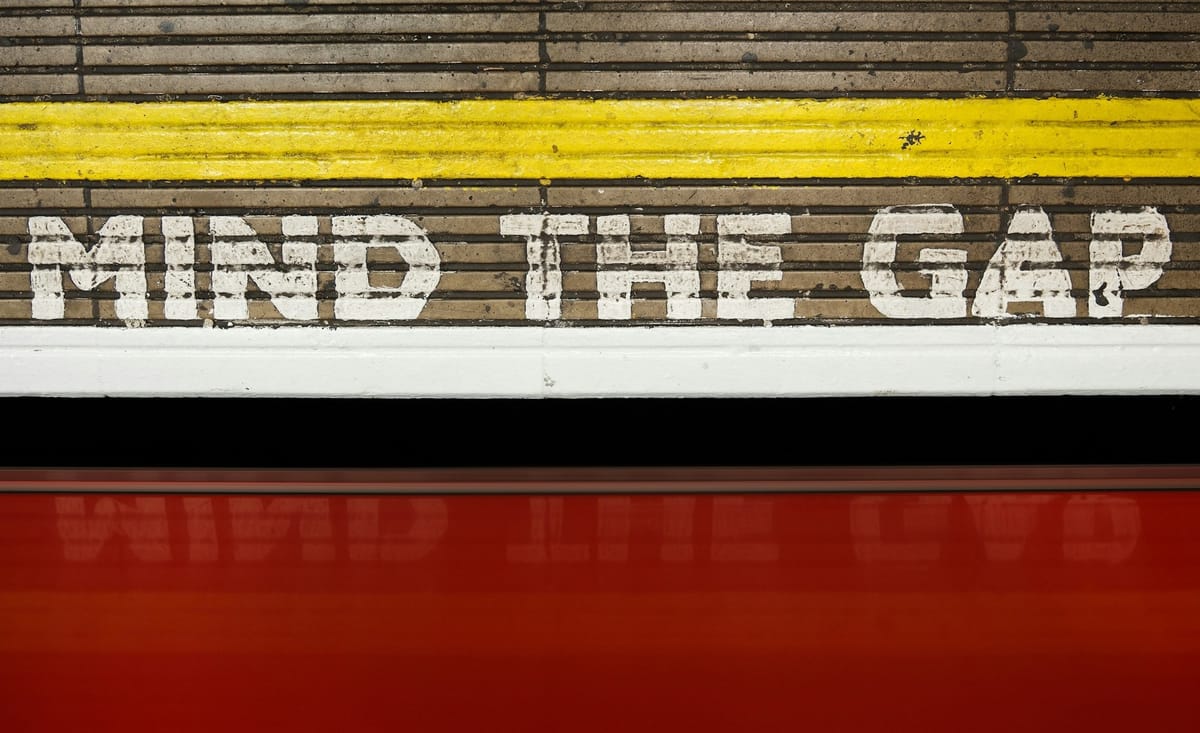
Forecasts for AI assume expansion at software speed. The constraints do not move at that pace. The limits are visible. Whether the projections adjust before they bind is the part left unaddressed.