How Ren Zhengfei Thinks About AI
Most public conversations about AI still begin with capability. Model size, benchmark scores, reasoning depth, and the pace at which new thresholds are crossed form the dominant vocabulary. Progress is framed as something that can be measured, compared, and ranked.
When Ren Zhengfei spoke with ICPC contestants at Huawei’s Lianqiu Lake research center in November 2024, he did not engage with that vocabulary. His remarks did not reference model breakthroughs, training techniques, or performance metrics. Instead, he repeatedly returned to a different set of concerns.
“Computing power will inevitably become abundant.”
“Computing power without networks is an information island.”
“Inventing AI may only strengthen one company. Applying AI can strengthen a country.”
Taken at face value, these statements do not describe an alternative model architecture or a competing research agenda. They point toward how AI is positioned once it leaves the laboratory.
What AI looks like in deployment
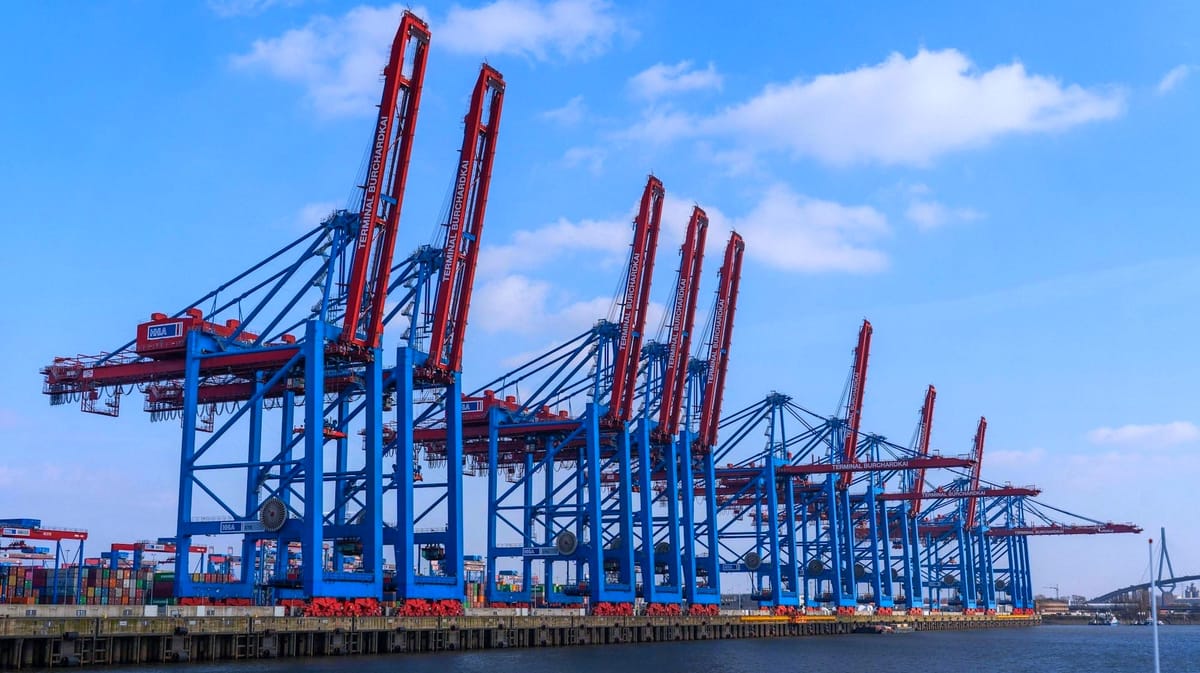
Huawei’s AI deployments are publicly observable. They appear in ports, mines, power grids, and logistics systems, embedded within environments that predate large language models. In these settings, AI does not surface as a discrete product or a stand-alone agent. It operates as part of an existing operational fabric.
Its functions are not framed as decision replacement, but as coordination. Scheduling freight movements, optimizing energy flows, monitoring equipment states, and maintaining continuity across complex processes. The value of these systems is not demonstrated through short-term performance gains, but through their ability to remain operational under changing conditions.
These deployments rarely produce demonstrations that translate into headlines. They do not refresh benchmarks or generate viral examples. Their success is assessed over time, often invisibly, and primarily when they fail to fail.
A different evaluation horizon
In this deployment logic, AI is judged less by what it can accomplish in isolation and more by how it behaves as part of a long-running system. The relevant question shifts from “What can this model do?” to “How does this system hold together over time?”
This orientation places emphasis on endurance rather than peak performance. AI is expected to function continuously, adapt to local constraints, and integrate with physical infrastructure and organizational processes. When it works as intended, it fades into the background. Attention returns only when coordination breaks down.
Nothing in this approach implies technological conservatism. It reflects a choice of where AI is allowed to surface and where it is expected to remain invisible.
An alternative deployment logic
Seen alongside mainstream AI narratives, this approach highlights a deployment logic that receives comparatively little attention. AI is not presented as an autonomous actor, nor as a consumer-facing product competing for adoption. It is treated as an infrastructural component, valued for reliability, integration, and persistence.
This logic does not attempt to redefine what AI is. It records how AI is used when it is embedded into systems that cannot easily pause, reset, or iterate in public.
Closing observation
AI development does not advance along a single axis. Different environments foreground different constraints, time horizons, and expectations. Some reward rapid iteration and visible breakthroughs. Others privilege continuity and coordination.
Ren Zhengfei’s remarks offer a window into one such environment. Not as a prescription, and not as a counter-ideology, but as a reminder that AI can be designed, evaluated, and deployed along dimensions that rarely dominate the conversation.